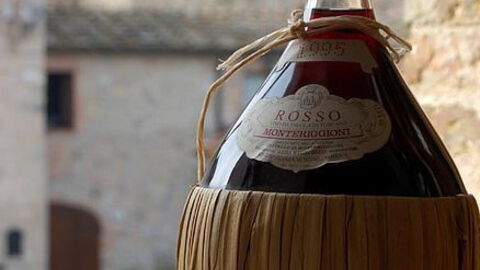
The Chianti region does not have clearly distinguishable boundaries based on morfological, geographical or climatic criteria. The only unifying element of the region is the production of a high quality red wine since the 12th century. The name, which comes from the Etruscan "Clante-i", was mentioned for the first time in documents from the 8th century in defining the territories of the ancient Lega (League), the administrative district that included the current communities of Radda, Gaiole and Castellina.
In 1932 the Chianti wine area was completely re-drawn and divided in seven sub-areas: Classico, Colli Aretini, Colli Fiorentini, Colline Pisane, Colli Senesi, Montalbano and Rùfina. Most of the villages that in 1932 were suddenly included in the new Chianti Classico area added in Chianti to their name-such as Greve in Chianti which amended its name in 1972. Wines labeled Chianti Classico come from the biggest sub-area of Chianti, that sub-area that includes the old Chianti area.
The other variants, with the exception of Rufina from the north-east side of Florence and Montalbano in the south of Pistoia, originate in the respective named provinces: Siena for the Colli Senesi, Florence for the Colli Fiorentini, Arezzo for the Colli Aretini and Pisa for the Colline Pisane. In 1996 part of the Colli Fiorentini sub-area was renamed Montespertoli.
It took some time but finally it is now possible to view the official brochures and guides of the Tourism Promotion Office for the Siena Territory (APT Siena) on line. Well, they do not contain much information but for sure they offer a lot of inspiration through the many big and splendid photos......
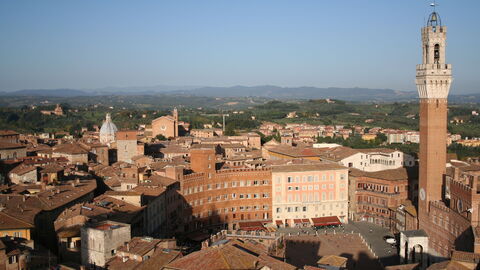
The Siena Tourist Promotion office has now set out a number of URBAN TREKKING itineraries inside the town walls of Siena....
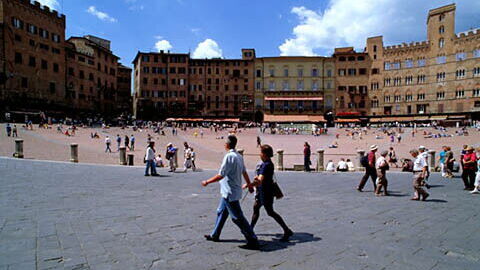
Urban trekking is a sport for all. Following an itinerary on foot through the hilly city streets of Siena does not require any special training. It is a perfect way of toning up the mind and body ! Ideal also for children, urban trekking is a new and entertaining way to get to know the history and artistic beauty of Siena where it is still possible to walk around easily and breathe clean air.
The newly released movie 'Letters to Juliet' was filmed mostly in Italy. While Verona gets most of the top billing, the film was primarily filmed in and around Siena, Montalcino and Castelnuovo Berardenga. Visit the Tuscany Villas website for more information on villa rentals in Tuscany.
This area is one of the most popular areas for villa rentals in all of Italy. Beautiful scenery combined with great food and wine makes for the perfect holiday vacation. Watch the movie and fall in love with Tuscany then come back and let us help you find the perfect villa or farmhouse for your trip to Italy. In Jerry Garrett's blog he posted an informative article about the filming of 'Letters to Juliet' - check it out.
For the last three weeks, I have been writing about vacation rentals in Tuscany – an introduction to Tuscany, how to select a vacation rental and the differences between houses in Italy and those in North America. This week’s blog article is about the fun things you can do in Tuscany once you are settled into your vacation rental for the week.
For this blog article I am concentrating on the area, south of Siena, near Montepulciano, Pienza and Montalcino. This is an area that my husband Steve and I have traveled to many times and we have never run out of new things to explore and old favorites to revisit.