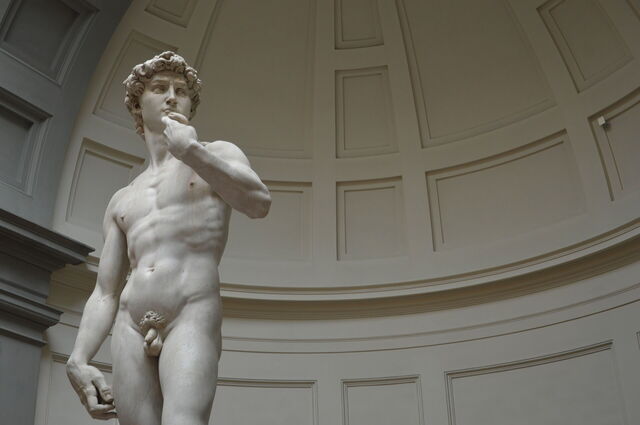
Michelangelo’s David has come up in a few of our recent articles and we thought it about time to write an updated post about the museum in which you can find this iconic sculpture. The museum in question is, of course, the Galleria dell'Accademia di Firenze and is often referred to merely as the Accademia. Smaller and a little more specialised than the Uffizi, it is also the second-most-visited art museum in Italy after the Uffizi. However, this does not mean that it should be skipped! In fact, any art-lovers who find a villa with pool in Florence and who are spending time exploring the birthplace of the Renaissance should definitely head to this gem. In addition to that most famous work by Michelangelo, there are paintings, sculptures, frescoes, and more from some of the greatest artistic talents who were working largely in the period of around 1300 to 1600.
So, if you have browsed our Tuscany villas and landed on your dream villa in Florence, what can you expect from a visit to the Accademia? Well, expect to set aside a decent amount of time. Despite the fact that the collection is not quite so large as the Uffizi, there is still a decent amount of extraordinary things to take in. In fact, for many this is a much more readily digestible museum that really rewards those with time to wander about for a couple of hours. For most guests, however, there will certainly be particular highlights and/or sections that are likely to be of more interest to you and that might be what you are looking forward to most during your visit.

For many, of course, this is likely to be seeing the David with their own eyes. Certainly, it is not to be missed but Michelangelo fans will be glad to know that there are actually more pieces by the great master to be seen at the gallery. In fact, initially, the Accademia was created with the intention of establishing a museum dedicated to Michelangelo in Florence that would house and protect the David after its move indoors from the Piazza della Signoria as well as other works by the artist upon the fourth centenary of his birth. While this exact vision did not come to pass, there is still a rather intriguing insight into the artist and his process on display.
As you approach the airy, bright, and domed space in which the biblical hero stands, you will walk along the so-called Hall of the Prisoners in which Michelangelo’s unfinished prisoner or slave sculptures are on display either side of the room. Intended for the tomb of Pope Julius II, they were never completed but this almost makes them more interesting. Michelangelo spoke of how he felt that his sculptures were already trapped inside blocks of marble and that he aimed to free them and give them life. The figures of the prisoners, in their various stages of completion, show exactly how his figures would begin to emerge and free themselves as he chiselled away at the blocks. Being able to have an insight into the methods of this great genius is incredibly fascinating and fortuitous. In addition to these four figures, there is also his unfinished sculpture of Saint Matthew and the Palestrina Pietà that was discovered in the Barberini chapel in Palestrina, although the attribution of this piece to Michelangelo is considered uncertain and dubious by experts today.
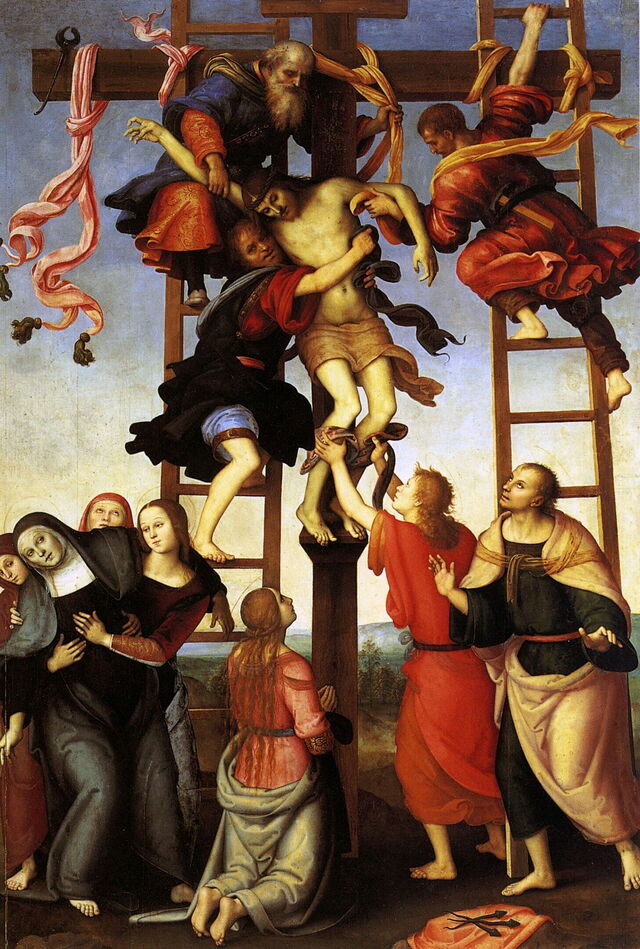
In addition to the Michelangelo works that make up the core of the collection, there is actually a wide and fascinating variety of objects to be discovered during a vacation in Florence and a visit to the Accademia. Other sculptural highlights include the model for the Rape of the Sabine Women by Giambologna that is by the entrance to the Galleria dell’Accademia in the Sala del Colosso and the Salone dell’Ottocento with its Gipsoteca (plaster cast collection) housing plaster models by Lorenzo Bartolini, a leading Italian sculptor from the turn of the 19th century, and Luigi Pampaloni. Then, of course, there are the paintings, with famous names including Giotto, Paolo Uccello, Domenico Ghirlandaio, Sandro Botticelli, and Andrea del Sarto among their number. On the ground floor, there are rooms with paintings from the 8th to the 9th centuries, paintings from the 15th century, and paintings from the 16th century. More 15th century paintings are on the first floor, with astonishing rooms full of gilded altarpieces. And music-lovers, in particular, and those who love beautifully made objects will find the Musical Interest Museum fascinating: a collection of forty instruments from the Grand Ducal collection of the Medici family, including the original handmade Antonio Stradivari, “Medici violin”. Furthermore, temporary exhibitions and events often take place at the gallery throughout the year.
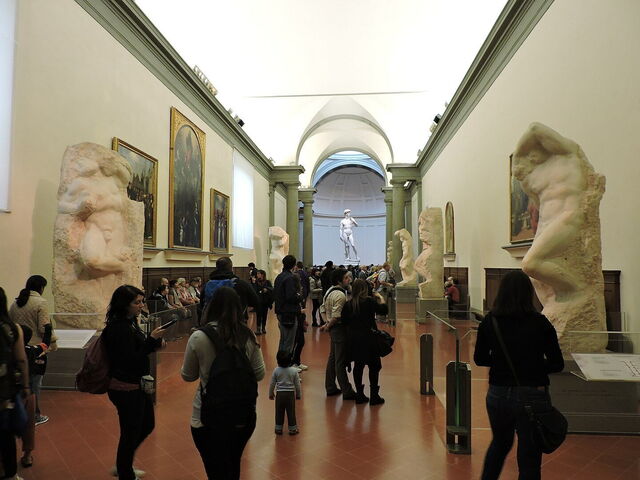
So, for a perfect day of wandering around a museum and taking in the most famous works and artists and seeing the most extraordinary spaces and objects, a visit to the Accademia during a holiday in Florence is quite hard to beat. A charming gem and a rather more manageable gallery than many with such exceptional collections in terms of scale, it packs a punch but is unlikely to leave you feeling too overwhelmed.
Galleria dell’Accademia di Firenze
Via Ricasoli, 58/60 50122 Firenze
+39 055 0987100
ga-afi.info@cultura.gov.it
Opening hours:
Daily, 8:15am to 6:50 pm (last admission at 6:20 pm).
Closed of the 1st of January, 25th of December, and every Monday.
Tickets:
Full €12.00
Reduced €2.00
+ €4 booking fee when booking online (however, we do suggest you book online well in advance as tickets are often sold out)