Titian was one of the most important artists of the Venetian school during the Italian Renaissance. While he completed lots of different kinds of works across a variety of genres, his lush and idyllic portrayals of female figures are largely what remain in the public imagination today. From early on in his own lifetime, in childhood, the talents of Tiziano Vecellio (known simply as, “Titian,” in English) were considered to be so extraordinary that they were labelled divine. Often compared in his own lifetime and since then to his somewhat older contemporary, Michelangelo, Titian was similarly gifted but, while the former favoured sculpture, Titian worked in painting and, while both were highly in demand, Titian's career faced less frustration and bestowed the artist with all of the worldly success an artist could hope for. He counted the city of Venice, lots of other Italian rulers, the Pope, the German Emperor, and the King of Spain among his patrons and, very quickly, his work became an international success.
In the centuries since Titian's lifetime, his work has remained rather enduringly famous and his name one of the most recognisable in the history of European art. His exceptional works have found homes in palaces, museums, and private collections all over the globe. However, one of his most famous and well-known works can be found in the Uffizi and is a must for any art-lover who has found a holiday rental in Tuscany or a
luxury villa in Florence and is planning a visit to that most hallowed of institutions. Titian's stunning, “Venus of Urbino,” a poetic beauty and an influential work on many later generations of artists, is definitely one of the endless masterpieces in the gallery that you should make a point of seeing with your own eyes as you wander around.
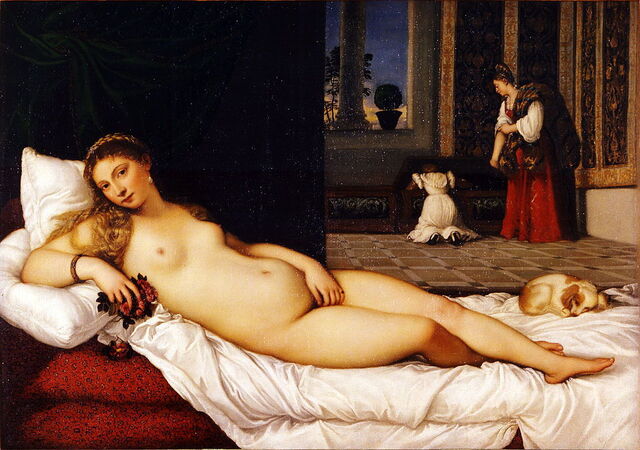
The, “Venus of Urbino,” (1536-8) is an oil on canvas, often labelled as an, “erotic masterpiece,” that was purchased by Guidobaldo, son of the Duke of Urbino, Francesco Maria della Rovere. Francesco Maria was a mercenary general and nephew of Pope Julius II who commanded armies for Florence and his uncle and went on to became the commander-in-chief of Venice's land forces in 1523. It is thought that he first met Titian at the coronation of Charles V in 1530 and the artist was soon commissioned to paint both Francesco Maria and his consort, Eleonora Gonzaga, the Duchess of Urbino. The, “Venus of Urbino,” is actually thought to have been commissioned by some anonymous patron but when the sale fell through and Guidobaldo, his father having already patronised Titian on multiple occasions, happened to spot the piece, the Duke-to-be desired it for himself. Various theories have abounded as to the exact purpose of the piece and why it was commissioned, with some suggesting that is was for a cassone, or wedding chest, to celebrate a marriage. However, it is just as likely that it was simply conceived of, primarily, as a great work of erotic art. This reading of the piece makes many contemporary viewers of the work and of Titian uncomfortable as it makes the master's great masterpiece into something somewhat voyeuristic or pornographic. Debates about the male gaze in the history of art and what that might mean for our enjoyment of some of our favourite works aside the, “Venus of Urbino,” is no less impressive in its technique and skill or importance.
It is still a rather extraordinary piece of art for many reasons: the transferal of a pose and manner of depiction previously used to conjure images of ancient goddesses in idyllic and timeless pastures into a domestic and contemporary setting; that the female figure boldly looks directly out at us and holds our gaze, a rather striking and innovative choice; and the masterful painting of the various surfaces and textures in the image from the female figure's soft golden locks to the crumpled bed sheets to the shine of her pearl earring to the heavy velvet drape behind her head to her arm sinking into a soft pillow; to name but a few notable features of the piece. The, “Venus of Urbino,” also remains an important and influential image that directly inspired Manet's, “Olympia,” among countless other works and artists from Rubens to Matisse.
Much debated and discussed, this fascinating and ground-breaking piece in Titian's oeuvre continues to spark interest in those that lay their eyes on the painting, centuries after it was first created. Beautiful, masterful, and intriguing, it is something that one really does have to see with their own eyes. So, if you're an art-lover in search of your next holiday destination, “The Venus of Urbino,” is just one more of thousands upon thousands of reasons (and works of art) to decide on a trip to Florence. Not only is the Uffizi itself packed with endless incredible masterpieces but the whole city, as the birthplace of the Renaissance and a place in which art and culture is infused in every building and street corner, is a dream for those interested in the history of European art. Browse our vacation rentals in Florence (or take a look at our holiday rentals in the wider region of Tuscany and plan some day-trips to the city) and come and visit the Uffizi. Then you can go and see the, “Venus of Urbino,” for yourself and see if you can figure out what all the fuss is about!
luxury villa in Florence and is planning a visit to that most hallowed of institutions. Titian's stunning, “Venus of Urbino,” a poetic beauty and an influential work on many later generations of artists, is definitely one of the endless masterpieces in the gallery that you should make a point of seeing with your own eyes as you wander around.
The, “Venus of Urbino,” (1536-8) is an oil on canvas, often labelled as an, “erotic masterpiece,” that was purchased by Guidobaldo, son of the Duke of Urbino, Francesco Maria della Rovere. Francesco Maria was a mercenary general and nephew of Pope Julius II who commanded armies for Florence and his uncle and went on to became the commander-in-chief of Venice's land forces in 1523. It is thought that he first met Titian at the coronation of Charles V in 1530 and the artist was soon commissioned to paint both Francesco Maria and his consort, Eleonora Gonzaga, the Duchess of Urbino. The, “Venus of Urbino,” is actually thought to have been commissioned by some anonymous patron but when the sale fell through and Guidobaldo, his father having already patronised Titian on multiple occasions, happened to spot the piece, the Duke-to-be desired it for himself. Various theories have abounded as to the exact purpose of the piece and why it was commissioned, with some suggesting that is was for a cassone, or wedding chest, to celebrate a marriage. However, it is just as likely that it was simply conceived of, primarily, as a great work of erotic art. This reading of the piece makes many contemporary viewers of the work and of Titian uncomfortable as it makes the master's great masterpiece into something somewhat voyeuristic or pornographic. Debates about the male gaze in the history of art and what that might mean for our enjoyment of some of our favourite works aside the, “Venus of Urbino,” is no less impressive in its technique and skill or importance.
It is still a rather extraordinary piece of art for many reasons: the transferal of a pose and manner of depiction previously used to conjure images of ancient goddesses in idyllic and timeless pastures into a domestic and contemporary setting; that the female figure boldly looks directly out at us and holds our gaze, a rather striking and innovative choice; and the masterful painting of the various surfaces and textures in the image from the female figure's soft golden locks to the crumpled bed sheets to the shine of her pearl earring to the heavy velvet drape behind her head to her arm sinking into a soft pillow; to name but a few notable features of the piece. The, “Venus of Urbino,” also remains an important and influential image that directly inspired Manet's, “Olympia,” among countless other works and artists from Rubens to Matisse.
Much debated and discussed, this fascinating and ground-breaking piece in Titian's oeuvre continues to spark interest in those that lay their eyes on the painting, centuries after it was first created. Beautiful, masterful, and intriguing, it is something that one really does have to see with their own eyes. So, if you're an art-lover in search of your next holiday destination, “The Venus of Urbino,” is just one more of thousands upon thousands of reasons (and works of art) to decide on a trip to Florence. Not only is the Uffizi itself packed with endless incredible masterpieces but the whole city, as the birthplace of the Renaissance and a place in which art and culture is infused in every building and street corner, is a dream for those interested in the history of European art. Browse our vacation rentals in Florence (or take a look at our holiday rentals in the wider region of Tuscany and plan some day-trips to the city) and come and visit the Uffizi. Then you can go and see the, “Venus of Urbino,” for yourself and see if you can figure out what all the fuss is about!