Located in the Province of Siena,Colle di Val d’Elsa is a pretty medieval town that is not far from the historic via Francigena and was, therefore, a pit-stop for travellers and pilgrims for centuries. Like many cities in Tuscany, it was once a centre of artistic and artisanal production but, unlike most of its neighbours, remains that way to this day. It continues to be the Italian capital of crystal and, as such, has been nicknamed the “Bohemia of Italy.” In fact, Colle di Val d’Elsa accounts for 95% of all Italian crystal glass production and 14% of the global production of crystal, which is an incredible feat.
Due to this scale and the economic importance of the craft in the town, it remains central to life for locals, with the first Sunday of each month playing host to a crystal market in town and open-air demonstrations of glass-making (from around 3pm) in the historical centre of the city on Via della Misericordia. In addition, there is also a rather special museum dedicated to the craft, the Museum of Crystal of Colle di Val d'Elsa, which puts these incredible objects on display. If you have found a holiday rental in Siena and are spending time exploring the province, set aside some time to get a little bit off the beaten tourist path and come enjoy the peace and beauty of this amazing town and its rich cultural history. You might even pick up a piece of crystal as a special and lovely souvenir of your time in this beautiful part of the world.
31
Jul
2019
2019
House-museums are dotted all over the globe and there are lots of them in Italy, in particular. These are a particularly insightful and interesting breed of museum in which objects by an artist are displayed in a space in which they grew up, lived, and/or worked. Often in a childhood or final home of an artist, they celebrate the full spectrum of the life and work of an artist and are a great way to get to know more about the maker behind the pieces.
In Rome you can find the Hendrik Christian Andersen House Museum, dedicated to the life and work of the Norwegian-American 20th century artist Hendrik Christian Anderson, in Milan there is the Manzoni House Museum, dedicated to 19th century Italian writer Alessandro Manzoni, and in Possagno, the Canova Museum, which is not a former home to the artist but is where much of his living and work spaces were transported, as well as works of art, after his death. Another, more recently established house museum dedicated to an artist is Forte dei Marmi’s Ugo Guidi Museum.
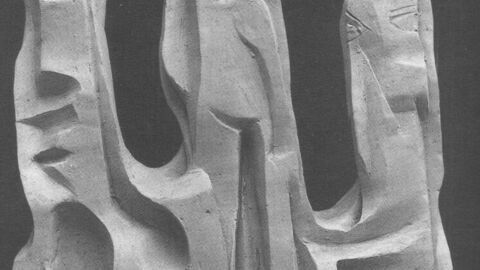
One of the most celebrated Italian sculptors of the 20th century, the museum is set in Ugo Guidi’s studio and home in this beautiful Tuscan seaside city. If you are interested in Italian art and fancy a Tuscan vacation by the sea, a holiday rental in Forte dei Marmi is a great idea as it will allow you to enjoy both at the same time! With over 600 sculptures, tempera paintings, drawings, and more by the artist on display, the Ugo Guidi Museum is a fine testament to his legacy that maps out the artist’s entire life and career inside the space in which he both worked and lived.
In Rome you can find the Hendrik Christian Andersen House Museum, dedicated to the life and work of the Norwegian-American 20th century artist Hendrik Christian Anderson, in Milan there is the Manzoni House Museum, dedicated to 19th century Italian writer Alessandro Manzoni, and in Possagno, the Canova Museum, which is not a former home to the artist but is where much of his living and work spaces were transported, as well as works of art, after his death. Another, more recently established house museum dedicated to an artist is Forte dei Marmi’s Ugo Guidi Museum.
One of the most celebrated Italian sculptors of the 20th century, the museum is set in Ugo Guidi’s studio and home in this beautiful Tuscan seaside city. If you are interested in Italian art and fancy a Tuscan vacation by the sea, a holiday rental in Forte dei Marmi is a great idea as it will allow you to enjoy both at the same time! With over 600 sculptures, tempera paintings, drawings, and more by the artist on display, the Ugo Guidi Museum is a fine testament to his legacy that maps out the artist’s entire life and career inside the space in which he both worked and lived.
4
Jul
2019
2019
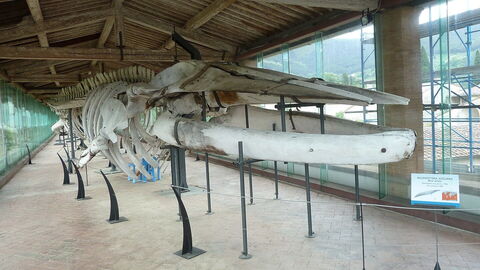
The University of Pisa is one of the oldest universities in the world and it is also home to a Natural History Museum that is also one of the oldest museums in the world. It has a surprisingly impressive and rich collection that could compete with any natural history museum in the world. If you have found a vacation rental in Pisa and you are looking for somewhere to spend a couple of hours out of the sun and learning more about the natural world, this is a fun and educational spot that is perfect to do just that!
Located in the Pisa Charterhouse (the Carthusian Monastery of Calci), 10km from the city of Pisa in the comune of Calci, the Natural History Museum of the University of Pisa (Museo Di Storia Naturale dell'Università di Pisa) was founded in 1596 by Grand Duke Ferdinand I of Tuscany. Originally composed of specimens sent from the Florentine palaces of the Medici and the Uffizi, in particular, it was somewhat fashioned on the German idea of a “wonderland”, meaning that it gathered together a variety of natural curiosities and oddities. This selection of minerals, zoo animals, skeletons, fossils, and more eventually expanded into a proper institution in its own right and became an early example of a natural history museum, which boasted a rich and impressive collection.
Located in the Pisa Charterhouse (the Carthusian Monastery of Calci), 10km from the city of Pisa in the comune of Calci, the Natural History Museum of the University of Pisa (Museo Di Storia Naturale dell'Università di Pisa) was founded in 1596 by Grand Duke Ferdinand I of Tuscany. Originally composed of specimens sent from the Florentine palaces of the Medici and the Uffizi, in particular, it was somewhat fashioned on the German idea of a “wonderland”, meaning that it gathered together a variety of natural curiosities and oddities. This selection of minerals, zoo animals, skeletons, fossils, and more eventually expanded into a proper institution in its own right and became an early example of a natural history museum, which boasted a rich and impressive collection.
Carrara Marble is famous worldwide. It adorns counters in the fanciest kitchens around the world and was the material of choice of the great Renaissance genius, Michelangelo. To this day, the area in and around Carrara is steeped in the tradition of marble quarrying and of parcelling it off to make beautiful things. You can go on exhilarating 4x4 tours through the glittering marble quarries of the region to see where the journey of so many famous art objects and buildings began, you can explore the stunning and exquisitely carved marble gem that is Carrara’s Cathedral and how the material can be used to its fullest and most extraordinary extent, you can wander around the many marble beauties in the town of Carrara, and you can also seek out the exceptionally lovely sculptures made of Carrara marble in churches and galleries and museums all over Tuscany, Italy, and the world.
14
Jun
2019
2019
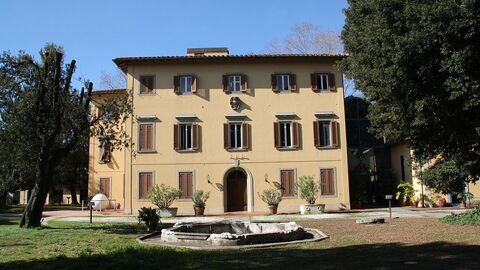
The Museo di Storia Naturale del Mediterraneo (or the Natural History Museum of the Mediterranean) is a long-standing beloved gem in the seaside city of Livorno in Tuscany that is a favourite of school groups and families. However, if you have found a vacation rental in Livorno and are planning on spending time in the area, it makes for an interesting visit for tourists too and, well, anyone, particularly those travelling with kids. Just set aside a couple of hours and come explore the models of various creatures, the dioramas, the interactive features, the impressive animal skeletons and much more besides…
Originally established in 1929, when famous naturalists from Livorno and the surrounding area collected lots of scientific equipment that had previously been part of the Cabinet of Natural History at the Technical Institute of Amerigo Vespucci. It was these objects that became the original basis of the collection of the museum. In 1944, bombing destroyed the museum and it was moved to the municipal aquarium and reopened there in 1952. The museum was moved once more in 1980 to a restored historic property in town, the Villa Henderson, and that is where it remains to this day.
Originally established in 1929, when famous naturalists from Livorno and the surrounding area collected lots of scientific equipment that had previously been part of the Cabinet of Natural History at the Technical Institute of Amerigo Vespucci. It was these objects that became the original basis of the collection of the museum. In 1944, bombing destroyed the museum and it was moved to the municipal aquarium and reopened there in 1952. The museum was moved once more in 1980 to a restored historic property in town, the Villa Henderson, and that is where it remains to this day.