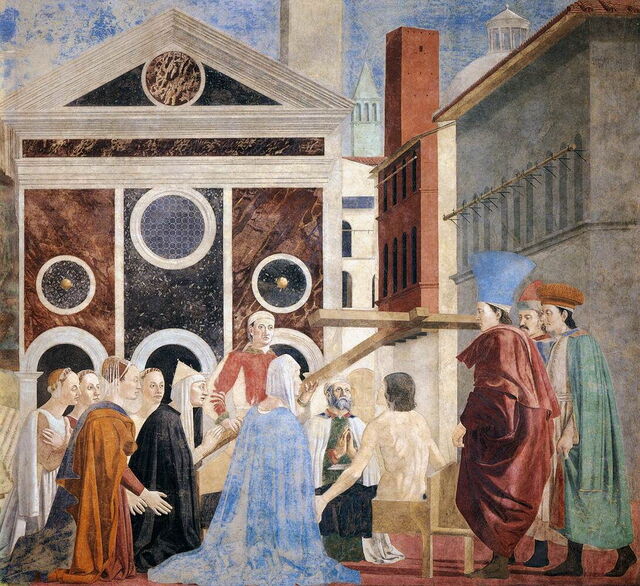
The Cappella Bacci is a chapel located in the apse of 14th-century Basilica di San Francesco, a single-nave building in Arezzo dedicated to St Francis and built reflecting the values typical of the mendicant orders of the day.
Work was begun in the second half of the thirteenth century and completed in the fourteenth, with a campanile added in the sixteenth century. Both exterior and interior are somewhat grave and austere, though the interior is a richer and less intensely pared back place.
The exterior is expressed with a roughly textured stone facade without any real ornamentation, while the interior is accented with niches containing fourteenth-century and Renaissance ornamentation and Gothic chapels.
One among these chapels is particularly famous: the Bacci Chapel, and the reason for its recognition and fame? It is home to a cycle of incredible frescoes by the famous Renaissance painter Piero della Francesca. Just find a luxury villa in Arezzo and drop by to see it for yourself.
Work was begun in the second half of the thirteenth century and completed in the fourteenth, with a campanile added in the sixteenth century. Both exterior and interior are somewhat grave and austere, though the interior is a richer and less intensely pared back place.
The exterior is expressed with a roughly textured stone facade without any real ornamentation, while the interior is accented with niches containing fourteenth-century and Renaissance ornamentation and Gothic chapels.
One among these chapels is particularly famous: the Bacci Chapel, and the reason for its recognition and fame? It is home to a cycle of incredible frescoes by the famous Renaissance painter Piero della Francesca. Just find a luxury villa in Arezzo and drop by to see it for yourself.
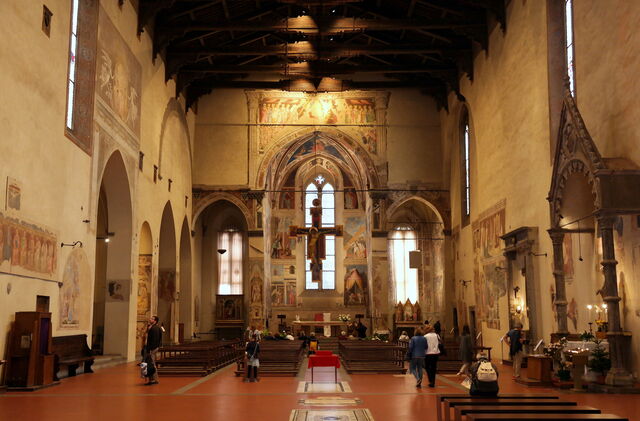
The church, austere as it may be, is actually home to several excellent works by famous artists including stained glass by Marcillat, canvases and frescoes by Spinello and a large crucifix panted by a contemporary of Cimabue. However, there is no denying that Piero della Francesca's works are the highlight of the whole building.
The fresco cycle recounts the tale of the Legend of the True Cross and were painted between 1452 and 1466 for the wealthy Bacci family of merchants in Arezzo. Originally, the Bacci had commissioned the Florentine painter Bicci di Lorenzo to decorate their chapel in 1447 but he only had a chance to finish work on the chapel’s vaulted ceiling before he, sadly, passed away in 1452. That same year Piero della Francesca took over the project for the Bacci family. The passing of di Lorenzo ended up being somewhat of a stroke of luck for the church and the history of art as della Francesca's work was revolutionary and remains a key moment in the development of Renaissance art. His frescoes were not only beautiful but also incredibly modern with a rare and innovative handle on perspective.
The fresco cycle recounts the tale of the Legend of the True Cross and were painted between 1452 and 1466 for the wealthy Bacci family of merchants in Arezzo. Originally, the Bacci had commissioned the Florentine painter Bicci di Lorenzo to decorate their chapel in 1447 but he only had a chance to finish work on the chapel’s vaulted ceiling before he, sadly, passed away in 1452. That same year Piero della Francesca took over the project for the Bacci family. The passing of di Lorenzo ended up being somewhat of a stroke of luck for the church and the history of art as della Francesca's work was revolutionary and remains a key moment in the development of Renaissance art. His frescoes were not only beautiful but also incredibly modern with a rare and innovative handle on perspective.
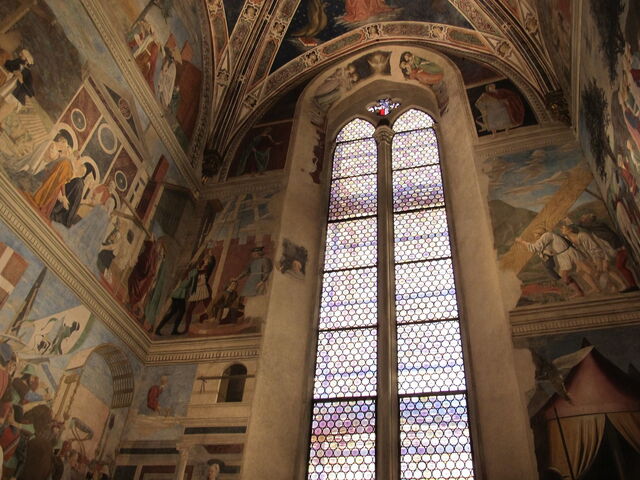
Set on three levels on the chapel’s side and rear walls, the cycle drew its subject-matter of the stories from Jacobus de Voragine's "Golden Legend". This 13th century text tells of how Adam's son, Seth, planted a tree that was later chopped down by King Solomon to make a bridge and then discovered by Queen of Sheba to be the wood on which the Saviour would be crucified. Solomon, knowing that this would be the end of the kingdom of the Jews, ordered the wood to be buried but it was eventually discovered in time to be the instrument of Christ's death. While no longer perfect, the frescoes have been restored and remain jewel-like and beautiful.
For security reasons, a maximum of 25 people are admitted to the Cappella Bacci at a time for 30 minutes and reservation is compulsory but it is well worth the few euros it costs and the wait, particularly for art history buffs visiting Tuscany.
For security reasons, a maximum of 25 people are admitted to the Cappella Bacci at a time for 30 minutes and reservation is compulsory but it is well worth the few euros it costs and the wait, particularly for art history buffs visiting Tuscany.
Photo credits
Picture 2: Luca Aless / CC BY-SA 4.0;
Picture 3: Combusken / CC BY-SA 3.0
Picture 2: Luca Aless / CC BY-SA 4.0;
Picture 3: Combusken / CC BY-SA 3.0