The Uffizi Gallery, in Florence, is one of the most extraordinary museums in the world and we have published various posts on the gallery itself, tips on visiting it and lists of highlights of the collections. However, there are also singular highlights, specific works, from the collection that deserve more of a word count and more consideration. One such piece is Artemisia Gentileschi's “Judith Slaying Holofernes”. One of the rare female painters of her time, a gifted artist and a fascinating person, she is an intriguing (and often overlooked) figure and this work, in particular, is intertwined with her life story and, thus, especially interesting. Just find a vacation rental in Florence, visit the gallery and make a point of seeking out this wonderful work of art.
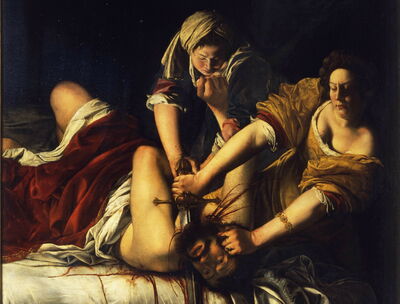
“Judith Slaying Holofernes” was completed between 1614–20 and then a second version (the one that is actually in the Uffizi) was made between 1620 and 1621. It depicts the biblical figure of Judith, in the act of beheading Holofernes. A story from the Book of Judith in the Old Testament, it tells the tale of the assassination of Assyrian general Holofernes at the hands of the young Israelite widow Judith. Having entered the enemy camp and tent of the lusting Holofernes, she killed the tyrant after he fell asleep from drinking and saved her city of Bethulia in the process.
A common scene in art since the early Renaissance, it was still popular in Baroque art and had been painted by the likes of Caravaggio, Giorgione, Titian, Rembrandt and Peter Paul Rubens previously but never quite like this. In other artists' depictions, the decapitation is an easy, methodical thing but in Gentileschi's work, it is a physical, brutal thing. A handmaid helps to hold Holofernes down while Holofernes struggles and Judith strains to behead him. Blood sprays from his wound and both women frown and tense in their efforts. Both women are small in comparison to the hulking Holofernes.
There is a good reason for this brutality: Judith is modelled on herself and fellow artist, Agostino Tassi, who was tried in court for her rape, is depicted as the figure of Holofernes. Gentileschi's biographer, Mary Garrard suggests that the piece acted as "a cathartic expression of the artist's private, and perhaps repressed, rage."
Read in this light, the work has become a key piece in the history of feminist art and, also, takes on a far more emotional note. Artemisia fought back and reclaimed her life after what happened to her, she refused to let it ruin her and this work reflects that. She went on to become on of the most progressive and expressive artists of her generation and is now being reclaimed as the important artist she was, rather than a salacious footnote in the history of art. Be sure to check out her powerful piece when you visit the Uffizi!
A common scene in art since the early Renaissance, it was still popular in Baroque art and had been painted by the likes of Caravaggio, Giorgione, Titian, Rembrandt and Peter Paul Rubens previously but never quite like this. In other artists' depictions, the decapitation is an easy, methodical thing but in Gentileschi's work, it is a physical, brutal thing. A handmaid helps to hold Holofernes down while Holofernes struggles and Judith strains to behead him. Blood sprays from his wound and both women frown and tense in their efforts. Both women are small in comparison to the hulking Holofernes.
There is a good reason for this brutality: Judith is modelled on herself and fellow artist, Agostino Tassi, who was tried in court for her rape, is depicted as the figure of Holofernes. Gentileschi's biographer, Mary Garrard suggests that the piece acted as "a cathartic expression of the artist's private, and perhaps repressed, rage."
Read in this light, the work has become a key piece in the history of feminist art and, also, takes on a far more emotional note. Artemisia fought back and reclaimed her life after what happened to her, she refused to let it ruin her and this work reflects that. She went on to become on of the most progressive and expressive artists of her generation and is now being reclaimed as the important artist she was, rather than a salacious footnote in the history of art. Be sure to check out her powerful piece when you visit the Uffizi!