For art lovers who have found a luxury villa in Florence and are planning on exploring the city, there are plenty of things to see and do. However, the Bargello is one of the best and most important art museums in Florence and should not be missed! As mentioned in our previous post, this is an excellent sculpture museum that is home to a large variety of pieces, including early works by great masters of the Renaissance such as Donatello and Michelangelo.
3. Donatello's Attys
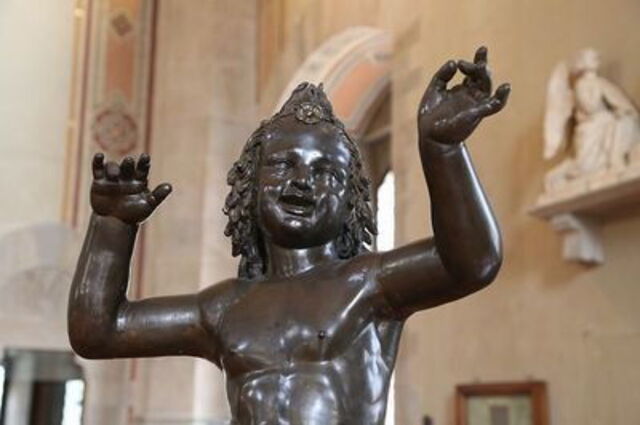
Speaking of Donatello, the Bargello houses his Attys, a bronze work from c.1440 that has been named but not definitively identified. The young male figure bears multiple iconographical details but none have allowed for certain identification. Guesses have included Priapus, Mercury, Perseus, Cupid, Harpocrates, Mithra, Ebrietas, and the guardian figure Genius. However, none fit perfectly.
3. Donatello's Attys
Speaking of Donatello, the Bargello houses his Attys, a bronze work from c.1440 that has been named but not definitively identified. The young male figure bears multiple iconographical details but none have allowed for certain identification. Guesses have included Priapus, Mercury, Perseus, Cupid, Harpocrates, Mithra, Ebrietas, and the guardian figure Genius. However, none fit perfectly.
The greatest clue to his identity may have been the object he once held but which has been lost since at least 1677. Atys was a beautiful shepherd who was hand-picked by Cybele as her priest and, over the centuries, this name has stuck to the work, even if it cannot be positively identified as such. Lively and engaging, the piece is fascinating as an accurate reflection of the dynamic qualities of Donatello's work as a whole.
4. Ammannati's Leda and the Swan
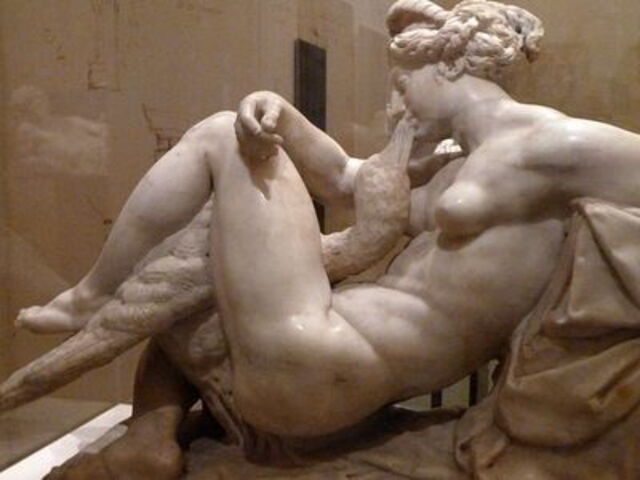
We have already discussed an example of a work by Michelangelo that is housed in the Bargello but there is also a work in the collection that is a copy after one of his lost works. Ammannati is a name that is unlikely to be well-known to most but his Leda and the Swan is a definite highlight of the Bargello's collection. An architect and sculptor born near Florence who worked across Italy, he largely imitated Michelangelo's Mannerist style. This work is created after a lost piece by Michelangelo and brings to life the great master's piece.
4. Ammannati's Leda and the Swan
We have already discussed an example of a work by Michelangelo that is housed in the Bargello but there is also a work in the collection that is a copy after one of his lost works. Ammannati is a name that is unlikely to be well-known to most but his Leda and the Swan is a definite highlight of the Bargello's collection. An architect and sculptor born near Florence who worked across Italy, he largely imitated Michelangelo's Mannerist style. This work is created after a lost piece by Michelangelo and brings to life the great master's piece.
Made of marble for the Duke of Urbino, and dating to the 1540s, it depicts the mythical figures of Leda and Zeus as the swan.
5. Giambologna's Bacchus
Giambologna, born Jean Boulogne, was a Flemish sculptor who lived and worked in 16th century Italy, producing marble and bronze sculptural works in late Renaissance or Mannerist style. After studying in Antwerp with the architect-sculptor Jacques du Broeucq, he moved to Italy in 1550 and studied in Rome. Influenced by Michelangelo, but producing a style that was less focused on emotion and more interested in refined surfaces, elegance, and beauty, he eventually ended up in Florence and was basically held in the city against his will, until his death, as the Medici did not want to lose his skill to any other European royal family.
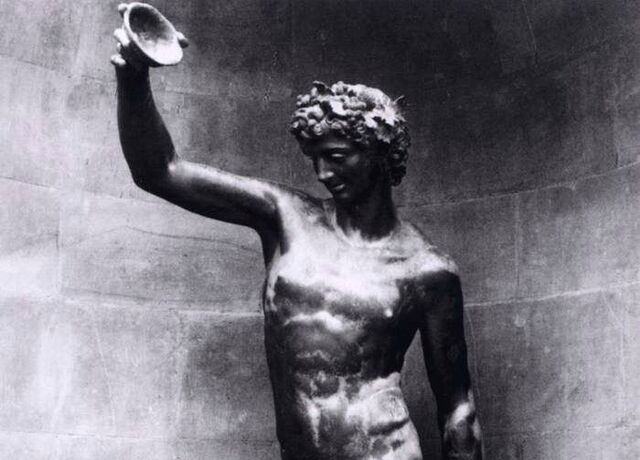
As well as Michelangelo's Bacchus, the Bargello is also home to a Bacchus by Giambologna. An early bronze work made between 1560 and 1565, it was saved by a bombardment of the German occupation forces during World War II and relocated into a niche in the Bargello, rebuilt by Tiezzi, in 1958, then moved to the Bargello in 2006 while a replica replaced it in its former home. While the Flemish sculptor is not as famous as some other names we have mentioned, he was an incredibly important artist and the Bargello offers a chance to examine this original work in person.
For even more highlights from the Bargello's collection, be sure to read on to the next post in this series.
5. Giambologna's Bacchus
Giambologna, born Jean Boulogne, was a Flemish sculptor who lived and worked in 16th century Italy, producing marble and bronze sculptural works in late Renaissance or Mannerist style. After studying in Antwerp with the architect-sculptor Jacques du Broeucq, he moved to Italy in 1550 and studied in Rome. Influenced by Michelangelo, but producing a style that was less focused on emotion and more interested in refined surfaces, elegance, and beauty, he eventually ended up in Florence and was basically held in the city against his will, until his death, as the Medici did not want to lose his skill to any other European royal family.
As well as Michelangelo's Bacchus, the Bargello is also home to a Bacchus by Giambologna. An early bronze work made between 1560 and 1565, it was saved by a bombardment of the German occupation forces during World War II and relocated into a niche in the Bargello, rebuilt by Tiezzi, in 1958, then moved to the Bargello in 2006 while a replica replaced it in its former home. While the Flemish sculptor is not as famous as some other names we have mentioned, he was an incredibly important artist and the Bargello offers a chance to examine this original work in person.
For even more highlights from the Bargello's collection, be sure to read on to the next post in this series.
Photo credits
picture 1: Rufus46 / CC BY-SA 3.0;
picture 2: Dave & Margie Hill / Kleerup / CC BY-SA 2.0
picture 1: Rufus46 / CC BY-SA 3.0;
picture 2: Dave & Margie Hill / Kleerup / CC BY-SA 2.0