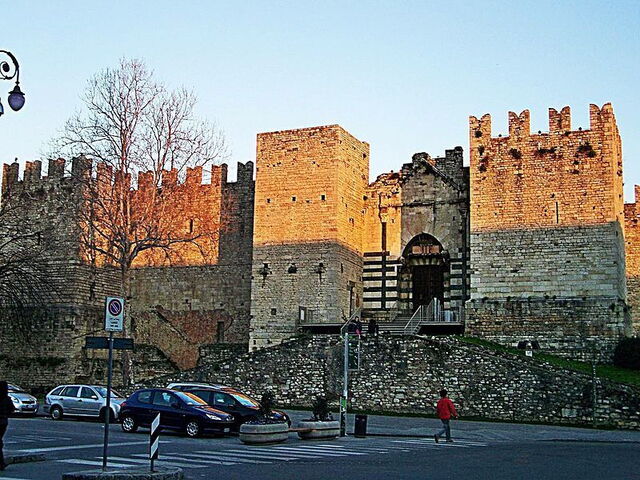
The Emperor's Castle (also known as the Fortress of Santa Barbara or Castello Svevo) is a castle in Prato, Tuscany. It is considered one of the most important examples of medieval architecture in the city and was the headquarters of the Imperial party in the Florentine countryside and the seat of the Imperial Viceroy of Tuscany. The square, thick-walled, imposing building is full of history and interest and worth visiting in its own right but is also now home to local events, festivals and, even, movie screenings. For this reason, it is all the more intriguing and there are even more reasons to visit. Once you've found a holiday rental in Prato and are exploring the historical centre of the city, find time to stop by the castle.
Work on the castle began in 1237 and ended in 1248 by order of the Holy Roman Emperor Frederick II of Swabia. It was intended to help bring the principal routes of communications that connected Tuscany to Germany under his control. The castle's architect was Riccardo da Lentini, who was the supervisor of the construction of the Emperor's other castles in Puglia, and masonry was brought specifically from the south for the project.
The site was already home to a pre-existing fortress, given to the Emperor by a Ghibelline family from Prato, and this was incorporated into the fabric of the new castle.
The site was already home to a pre-existing fortress, given to the Emperor by a Ghibelline family from Prato, and this was incorporated into the fabric of the new castle.
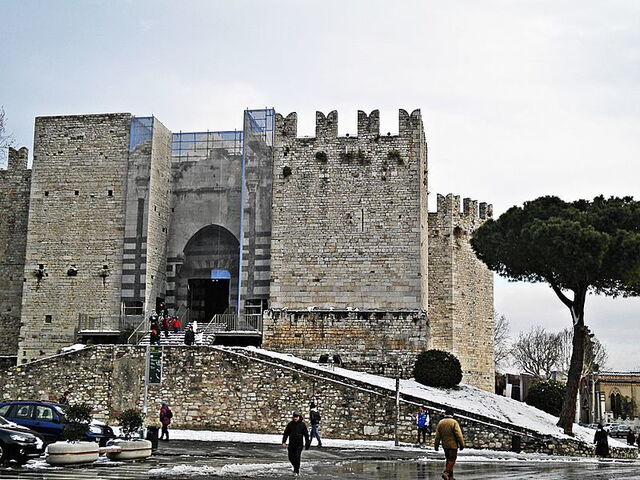
The most obvious feature of the castle is its striking exterior. It is a marvellous example of a Federician Castle, like those that are found in the South of Italy – such as Castel del Monte or Lagopesole – but is the only example in this part of the country. Square in plan, with one tower to each corner to all angles and one at the centre of every side of the wall curtain (two inherited from the first fortress), it is an exceptionally intimidating building. However, its not all purely defensive design, there are lots of decorative elements as well. The walls and the towers are topped by distinctive Ghibelline battlements, the main gate is a gothic arch embellished in designs made of white and green marble and lion sculptures are present as a symbol of Imperial power.
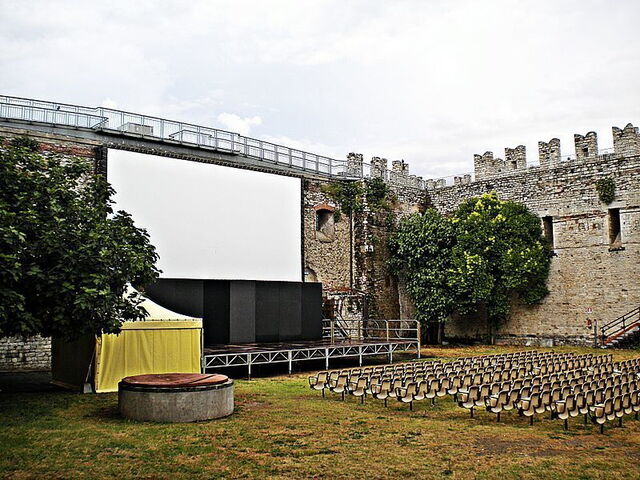
During the fourteenth century, the Florentine government transformed the building into military garrison and prison, connecting it to fourteen century walls by the Bridge House. Now it is a popular tourist attraction in Tuscany and, in the summer, it becomes a space for outdoor performances, concerts and movie screenings.
During the fourteenth century, the Florentine government transformed the building into military garrison and prison, connecting it to fourteen century walls by the Bridge House. Now it is a popular tourist attraction in Tuscany and, in the summer, it becomes a space for outdoor performances, concerts and movie screenings.
Photo credits
picture 1: Massimilianogalardi / CC BY-SA 3.0;
picture 2: Massimilianogalardi / CC BY-SA 3.0;
picture 3: Massimilianogalardi / CC BY-SA 3.0
picture 1: Massimilianogalardi / CC BY-SA 3.0;
picture 2: Massimilianogalardi / CC BY-SA 3.0;
picture 3: Massimilianogalardi / CC BY-SA 3.0