
Ted Jones, the author of 'Florence And Tuscany: A Literary Guide for Travellers', was kind enough to write this introduction to his book. We highly recommend the book for all literary-minded travellers.
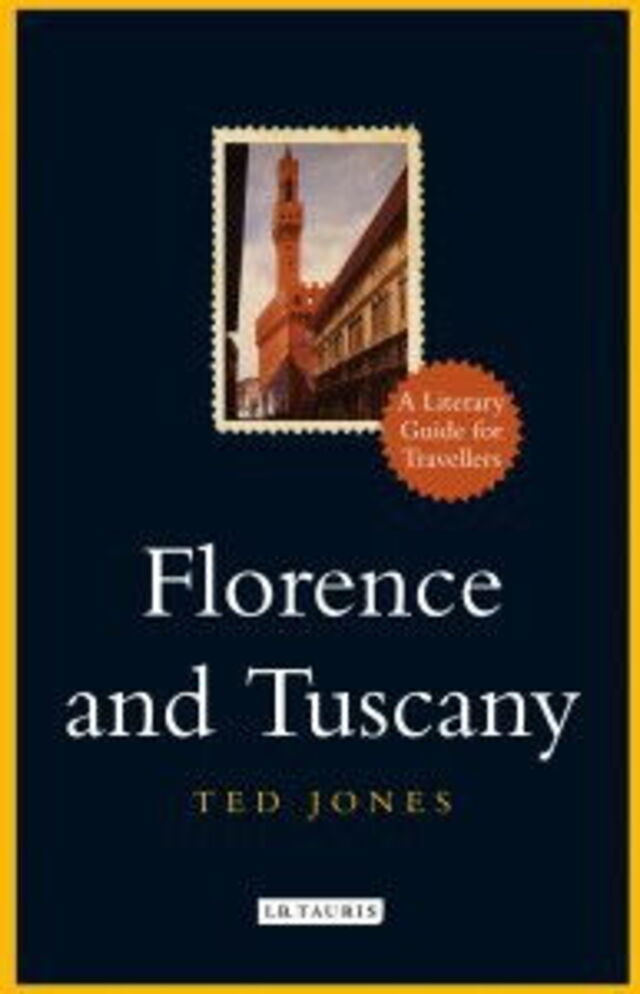
Tuscany: The Divine Country
When I told a friend that I was planning to write a book retracing the footsteps of the writers who have lived and worked in Ruskin’s “divine country”, she said, “Sounds like the assignment to die for”. I agreed: the prospect of spending a year or so roaming the verdant landscapes of Tuscany – stopping only for the occasional chianti and crostini – was irresistible.
In the middle of the 19th century, the English author John Ruskin wrote to his father from Tuscany: “You cannot conceive what a divine country this is just now; the vines with their young leaves hang as if they were of beaten gold”.
I fell in love with Tuscany when I was there as a student. I was studying Italian art of the 14th century – what Italians call the trecento. Now, fortunate enough to live just a few hours’ train ride away, I have been back many times, but never tire of the great Tuscan cities and their artistic treasures.
In the middle of the 19th century, the English author John Ruskin wrote to his father from Tuscany: “You cannot conceive what a divine country this is just now; the vines with their young leaves hang as if they were of beaten gold”.
I fell in love with Tuscany when I was there as a student. I was studying Italian art of the 14th century – what Italians call the trecento. Now, fortunate enough to live just a few hours’ train ride away, I have been back many times, but never tire of the great Tuscan cities and their artistic treasures.
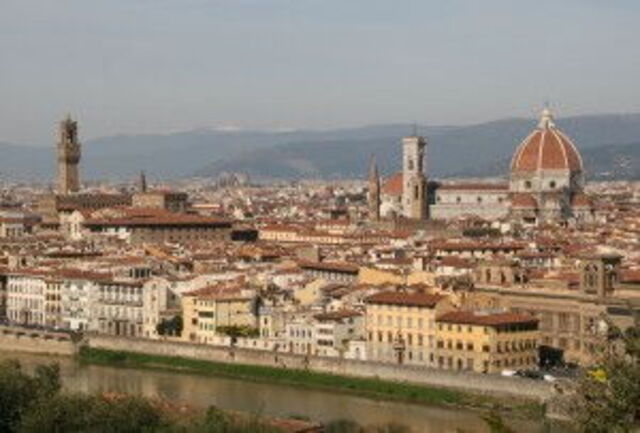
During my earlier visits, I had become increasingly aware of Tuscany’s ancient traditions of authorship: the three greatest writers in Italian history; Dante, Petrarch and Boccaccio, were all native Tuscans and the region has been a magnet and an inspiration to northern European writers since the arrival there of the English poet, Geoffrey Chaucer, in 1373.
Having written about the writers of the French Riviera a few years ago, (The French Riviera: A Literary Guide), I recognised in Tuscany the classic setting for a literary guide.
My intention was to traverse Tuscany from north to south, using public transport rather than car in order to meet local people; and staying in rented accommodation rather than hotels. From Lucca, the romantic city – now doubly so because it was in its mandorla-shaped Piazza del Anfiteatro that my wife and I became engaged – the rails led to Pisa, with its famously faulty tower and the cathedral that Henry James condescendingly preferred “of all the smaller cathedrals of Italy”, and thence up the valley of the Arno to Florence, where Mark Twain wrote “Florence pleased us for a while”, on his first visit, but later wanted to spend the rest of his life there.
Having written about the writers of the French Riviera a few years ago, (The French Riviera: A Literary Guide), I recognised in Tuscany the classic setting for a literary guide.
My intention was to traverse Tuscany from north to south, using public transport rather than car in order to meet local people; and staying in rented accommodation rather than hotels. From Lucca, the romantic city – now doubly so because it was in its mandorla-shaped Piazza del Anfiteatro that my wife and I became engaged – the rails led to Pisa, with its famously faulty tower and the cathedral that Henry James condescendingly preferred “of all the smaller cathedrals of Italy”, and thence up the valley of the Arno to Florence, where Mark Twain wrote “Florence pleased us for a while”, on his first visit, but later wanted to spend the rest of his life there.
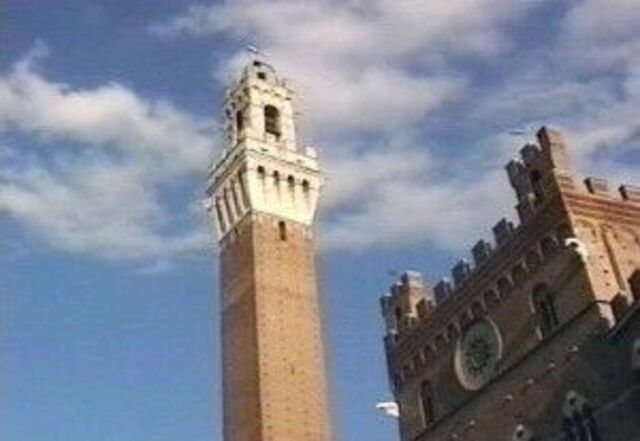
The city has been the prime destination of itinerant authors and poets for seven centuries: Elizabeth Barrett Browning, who lived and died there, loved it “like a beloved native land”, and Charles Dickens, in his Pictures from Italy, called it, “a city of rich forms and fancies”. But Florence was not every British writer’s cappuccino: the Welsh poet Dylan Thomas wrote, “I am awfully sick of it here, drinking chianti in our marble shanty” – and re-emigrated to the Tuscan island of Elba. From Florence, the literary trails led to Siena - which Dickens called “a bit like Venice without the water” – then via Livorno, Tuscany’s Mediterranean gateway, to Volterra and San Gimignano, with its forest of medieval towers, and finally to Arezzo and Cortona and the borders of Umbria.
Writing about a region’s writers is an endless process of discovery: you set off retracing the footprints of a writer, and discover places that you weren't looking for.
The converse is equally true: while looking in unknown places, you discover fresh writers. While researching the death by drowning of Shelley, just a few days short of his 30th birthday, I found the Casa Magni, his beachside house in Lerici on the eastern banks of the Gulf of La Spezia, (Il Golfo de Poeti), on which Charles Dickens and his entourage waited for the wind to drop so that they could cross the River Magra. (“The passage”, he wrote, “is not by any means agreeable”).
It was about a mile away at Fiascherino, at the Magra’s craggy mouth, that D.H.Lawrence wrote Sons and Lovers. Across on the western sides of the Gulf lie the beautiful but little-known Cinque Terre – the five crepuscular “lands” perched along the cliff’s edge, and their portal village of Portovenere, from whose tiny harbour Lord Byron swam across the Gulf to drop in on his old friend Shelley. It is a serendipitous process: the more you find, the more there is to explore.
The stream of migrant writers that had begun with Chaucer became, with the onset of the Grand Tour - that aristocratic gap year with which noble British families hoped to round off the classical studies of their sons by exposing them to Europe’s cultural treasures – a river; and with the advent of affordable travel, the river became a deluge: a literary exodus that now shows no sign of abating.
Novelists, biographers, historians and poets came from many countries: from France, Alexandre Dumas; from Germany, Wolfgang von Goethe; from Denmark, Hans Christian Anderson, and from Russia, Dostoevsky and Tchekhov. The American invasion began early in the 19th century with poets and novelists such as Longfellow, Mark Twain, Henry James, Sinclair Lewis and John Steinbeck. But they were all far outnumbered by the British: the Shelleys, Byron, Dickens, Thomas Hardy, E.M. Forster, Muriel Spark, Dylan Thomas - and many more.
Migrating writers have found in the Tuscan people and landscape an inexhaustible source of characters and settings. Few expatriate literati returned home without the green shoots of their “Tuscany novel” in their baggage: Lawrence, with Aaron’s Rod, George Eliot with Romola and Lewis with World So Wide. Forster brought home two shoots: Where Angels Fear to Tread and the late-blooming A Room with a View.
It has been a fascinating journey, discovering along the way familiar writers and new ones who found their writing voices in Tuscany; I learned, as Kipling put it, Something of Myself, and noted that, despite wars, invasion, pestilence and plague; Garibaldi, Mussolini and Berlusconi – Tuscany itself remains stubbornly unchanged.
'Florence And Tuscany: A Literary Guide for Travellers' is available at Amazon.com.
Writing about a region’s writers is an endless process of discovery: you set off retracing the footprints of a writer, and discover places that you weren't looking for.
The converse is equally true: while looking in unknown places, you discover fresh writers. While researching the death by drowning of Shelley, just a few days short of his 30th birthday, I found the Casa Magni, his beachside house in Lerici on the eastern banks of the Gulf of La Spezia, (Il Golfo de Poeti), on which Charles Dickens and his entourage waited for the wind to drop so that they could cross the River Magra. (“The passage”, he wrote, “is not by any means agreeable”).
It was about a mile away at Fiascherino, at the Magra’s craggy mouth, that D.H.Lawrence wrote Sons and Lovers. Across on the western sides of the Gulf lie the beautiful but little-known Cinque Terre – the five crepuscular “lands” perched along the cliff’s edge, and their portal village of Portovenere, from whose tiny harbour Lord Byron swam across the Gulf to drop in on his old friend Shelley. It is a serendipitous process: the more you find, the more there is to explore.
The stream of migrant writers that had begun with Chaucer became, with the onset of the Grand Tour - that aristocratic gap year with which noble British families hoped to round off the classical studies of their sons by exposing them to Europe’s cultural treasures – a river; and with the advent of affordable travel, the river became a deluge: a literary exodus that now shows no sign of abating.
Novelists, biographers, historians and poets came from many countries: from France, Alexandre Dumas; from Germany, Wolfgang von Goethe; from Denmark, Hans Christian Anderson, and from Russia, Dostoevsky and Tchekhov. The American invasion began early in the 19th century with poets and novelists such as Longfellow, Mark Twain, Henry James, Sinclair Lewis and John Steinbeck. But they were all far outnumbered by the British: the Shelleys, Byron, Dickens, Thomas Hardy, E.M. Forster, Muriel Spark, Dylan Thomas - and many more.
Migrating writers have found in the Tuscan people and landscape an inexhaustible source of characters and settings. Few expatriate literati returned home without the green shoots of their “Tuscany novel” in their baggage: Lawrence, with Aaron’s Rod, George Eliot with Romola and Lewis with World So Wide. Forster brought home two shoots: Where Angels Fear to Tread and the late-blooming A Room with a View.
It has been a fascinating journey, discovering along the way familiar writers and new ones who found their writing voices in Tuscany; I learned, as Kipling put it, Something of Myself, and noted that, despite wars, invasion, pestilence and plague; Garibaldi, Mussolini and Berlusconi – Tuscany itself remains stubbornly unchanged.
'Florence And Tuscany: A Literary Guide for Travellers' is available at Amazon.com.